
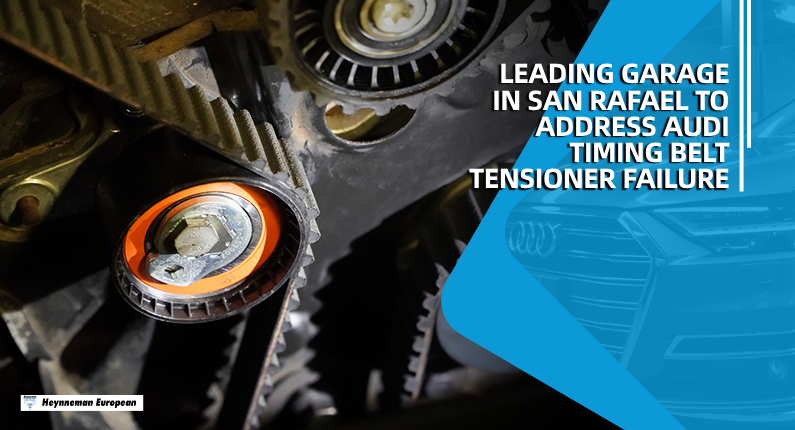
Audi vehicles are precision-engineered machines that reward diligent maintenance with exceptional performance and longevity. Among the most critical maintenance items on Audi models equipped with a timing belt is the timing belt tensioner. When this component begins to fail, the entire timing system is at risk — and on Audi’s interference engines, a timing failure means catastrophic engine damage. At Heynneman European auto shop in San Rafael, California, our Audi specialists have performed countless timing belt system services and understand what is required to keep your Audi’s engine running safely for the long haul.
Understanding the Audi Timing Belt Tensioner
The timing belt tensioner is a spring-loaded or hydraulic mechanism that maintains the correct tension on the timing belt as it drives the camshafts. Unlike a loose drive belt that simply squeals, a loose timing belt can slip teeth on the camshaft sprocket, causing the engine’s valve timing to shift out of specification. The result is rough running, misfires, reduced power — and ultimately, if the belt slips far enough, bent valves and a ruined engine.
Audi models most commonly affected by timing belt tensioner issues include those equipped with the 1.8T, 2.0T TFSI, and various 2.4 and 2.8 V6 engines. The tensioner on these engines has a limited service life that Audi specifies in terms of mileage and time intervals.
Symptoms of a Failing Timing Belt Tensioner
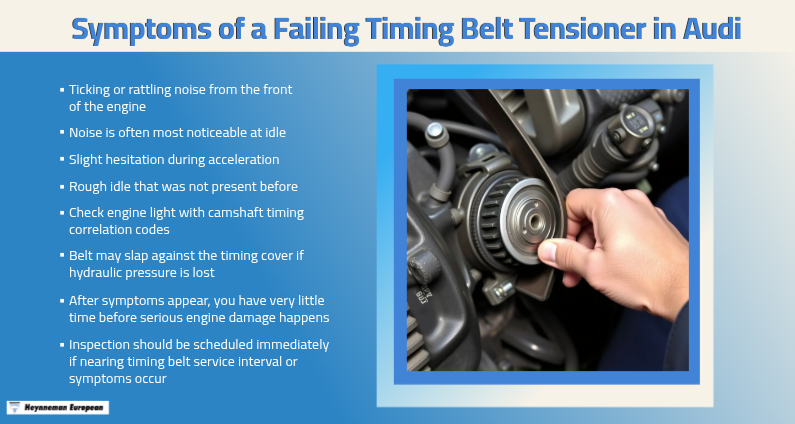
The earliest symptom is usually a ticking or rattling noise from the front of the engine, often most noticeable at idle. Some drivers also notice a slight hesitation during acceleration or a rough idle that was not present before. A check engine light with codes related to camshaft timing correlation is another strong indicator. On tensioners that have lost hydraulic pressure, the belt may audibly slap against the timing cover under certain conditions.
Once symptoms appear, the window to act before serious damage occurs is short. Our advice is always the same: if your Audi is approaching its timing belt service interval or you are experiencing any of these symptoms, schedule an inspection immediately.
Why Heynneman European Is the Right Choice for Audi Timing Service
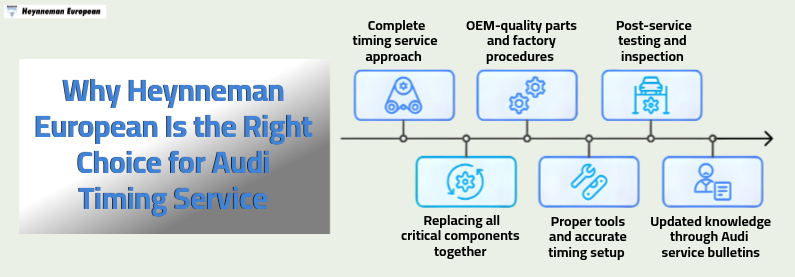
At Heynneman European, we treat every timing belt service as a complete system job. We replace the belt, tensioner, idler rollers, and water pump as a unit — because replacing the belt while leaving an aging tensioner in place is false economy. We use OEM-quality components and Audi factory timing procedures, including the specific locking tools required to set the crankshaft and camshaft positions correctly. After reassembly, we perform a thorough test drive and reinspect the timing system before returning your vehicle.
Our technicians stay current on Audi technical service bulletins, which means we are aware of any manufacturer-issued updates or revised procedures that apply to your specific model year and engine.
Address: 3155 Kerner Blvd, San Rafael, CA 94901
Phone: (415) 499-1234
Website: heynnemaneuropean.com
Frequently Asked Questions
Q: What is the timing belt replacement interval for my Audi?
A: Most Audi models with a timing belt require service every 60,000 to 80,000 miles or every five years, whichever comes first. Check your owner’s manual or ask our service advisors for the specific interval for your model and engine.
Q: Should I replace the water pump during timing belt service?
A: Yes. On most Audi models, the water pump is driven by the timing belt and shares the same labor. Replacing it at the same time costs relatively little in additional parts but saves you from having to redo the entire job if the water pump fails later.
Q: What happens if the timing belt breaks on my Audi?
A: Most Audi engines are interference designs, meaning a broken timing belt causes immediate collision between pistons and valves. The result is typically bent valves and can include a damaged cylinder head — a repair costing several thousand dollars or more.
Q: Does Heynneman European service all Audi models?
A: Yes. We service the full range of Audi vehicles, from the A3 and A4 to the Q7 and RS-line performance models. Our technicians are trained specifically on European vehicles.
