
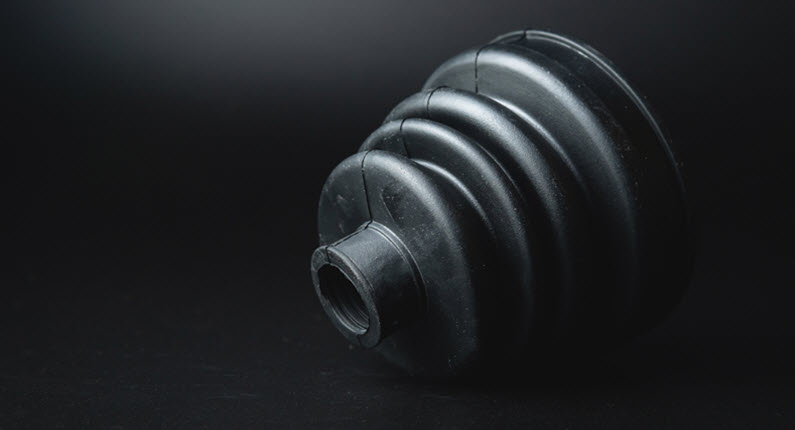
If you drive a Volkswagen, you already know how dedicatedly its various auto parts work to keep it running right. But if you have ever heard an odd clicking noise while turning or spotted some greasy splatter near the wheel area, then just like any standard vehicle, its CV Boot might be suffering. These are things that stick in your mind. Today, we are here to talk about this small yet mighty part that can cause significant issues once it tears out. So, let’s dive into how it works, what happens when it fails, and whether it’s safe to continue driving your VW in this situation.
The role of your Volkswagen’s CV boot
The CV (constant velocity) joint is a critical part of the drivetrain that allows the wheels to move up and down while maintaining power. The CV boot is a flexible rubber or plastic cover that keeps the joint protected and sealed from dirt, debris, and moisture―and holds the special grease inside.
However, when that boot tears, that protective barrier goes away, letting dirt and water in and grease escape. That means the joint is exposed and can start wearing out much faster. If you keep driving with that condition, you are gonna need the whole joint replaced, not just the boot.
Warning Signs that Your Volkswagen’s CV Boot is Ripped
Our certified technicians inspect a torn CV boot by examining several visual and audible cues. You, being a driver, can check:
- Grease splattered around the wheel area, on suspension components, or under your car.
- A cracked or torn rubber boot can be seen near the axle or wheel hub.
- Clicking or popping noises while making turns, mainly during low-speed turns in sharp corners.
- Vibrations from the wheel area while speeding up or going around corners.
Any of these signs indicates that the torn boot is now affecting the joint. So it’s time to act.
Is it Okay to Drive Your Volkswagen With a Damaged CV Boot?
From a practical standpoint, we completely understand that you may need to drive your VW for a short period even after discovering the tear in the CV boot. Yes, it’s possible. But here are the conditions you should keep in mind:
- Keep speeds moderate, avoid heavy loads, and don’t make sharp turns if possible.
- Try to schedule a repair as early as you can, because the joint will deteriorate faster now.
- Be prepared for the cost to increase if you wait too long; what could have been a simple boot replacement this moment may turn into a joint or axle replacement the next.
So yes, driving is possible—but only if you are aware of the risk and act accordingly.
What Happens If You Ignore Your Volkswagen’s Bad CV Boot?
When a torn CV boot goes unchecked, the risk eventually escalates. We have repaired many VWs where the torn boot turned into a bad CV joint, or even worse. Here’s what the deterioration can lead to:
- Loss of grease increases friction in the joint, accelerating
- Dirt, grit, and water get into the joint, leading to corrosion, pitting, and sudden failure.
- Moreover, if the joint fails, you could lose power to the wheel or experience a sudden failure while turning.
- Sometimes the axle or surrounding components are also affected, which ultimately increases repair costs.
In short, what starts as a boot tear can turn into a full-blown drivetrain failure if ignored. We highly recommend acting sooner rather than waiting even a few days.
What can We Do at Our Repair Shop to Fix Your Volkswagen’s Faulty CV Boot?
If you drive a Volkswagen and discover 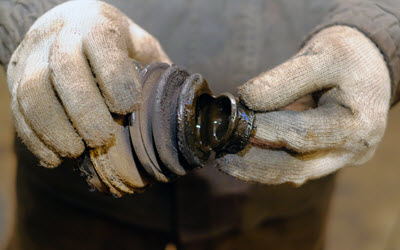 a torn CV boot, Heynneman European, right here in San Rafael, CA, is your ultimate destination. Why? Because our team of experienced professionals is ready to inspect your car, give you honest advice, and get the repair done right. How? Here’s how we handle it:
- Visual inspection to determine the extent of damage, whether it’s a torn boot only, or the joint is also impacted.
- Check whether the grease is contaminated and whether the joint can be repaired or requires a full replacement.
- If only the boot is damaged and the joint is okay, we will replace the boot, clean the joint, replenish it with the correct grease, and adequately secure the clamps.
- If the joint is worn, we swap the CV joint or axle assembly with new OEM parts suitable for your VW model.
- Finally, we perform a test drive to ensure the repair is solid and that you will be safe on the road in the long run.
To repair your VW’s torn CV boot, give us a call today and get back on the road safely and confidently.
